Strong operations and solid finances at Samherji in 2025
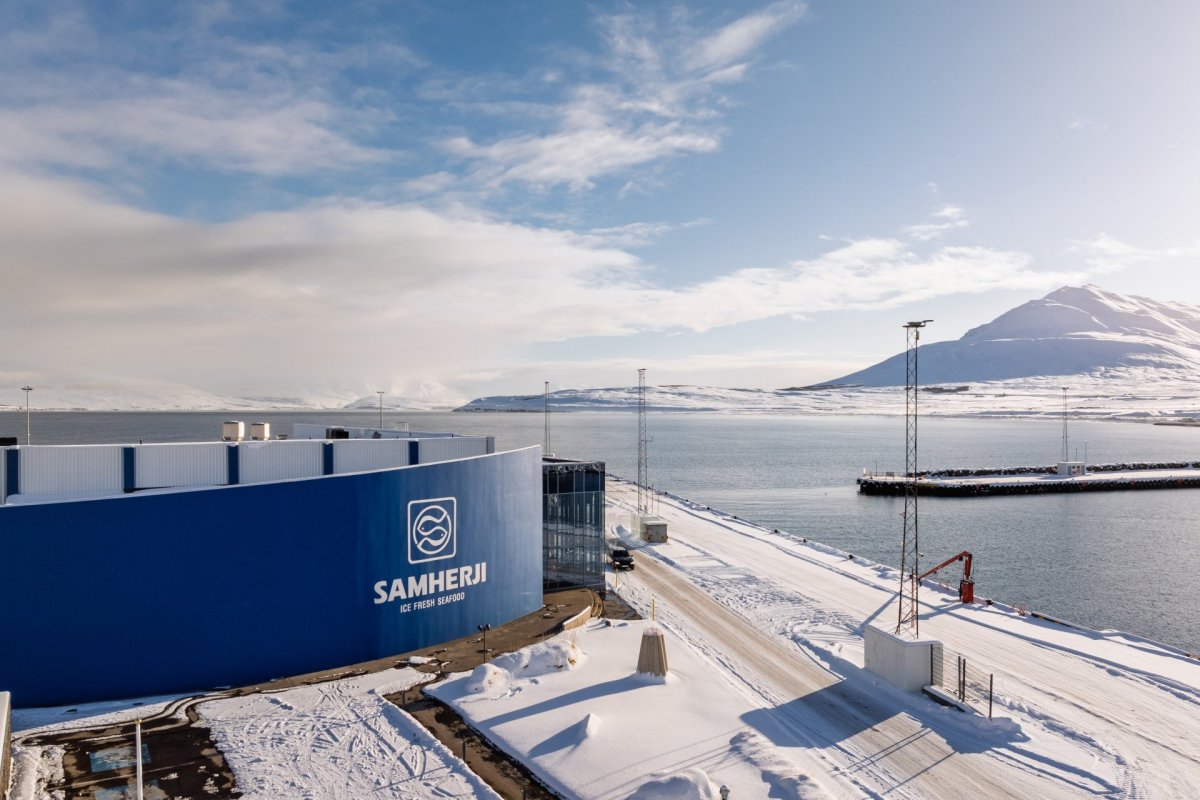
Samherji hf. delivered strong financial results in 2025. Group revenues amounted to €542 million, and earnings before interest, taxes, depreciation and amortisation (EBITDA) amounted to €73.9 million, an increase of €12.5 million year-on-year.
Operating profit (EBIT) was €50.4 million compared to €42.4 million the previous year, an increase of nearly 19%. The increase in operating profit is primarily attributable to high product prices in whitefish markets and solid core operations. Profit after tax was €58.6 million.
Assets at year-end amounted to €892.5 million, and equity amounted to €676.8 million. The equity ratio at year-end was 75.8%.
"Samherji's financial statements show that the company's operations are sound and its finances are strong. This enables the company to pursue investments that strengthen its competitive position and that of the Icelandic fishing industry,” says Baldvin Thorsteinsson, CEO of Samherji.
The year 2025 was an eventful one for Samherji. A turning point came when the company's founders, Thorsteinn Már Baldvinsson and Kristján Vilhelmsson, retired after 42 years with the company. Baldvinsson served as CEO and Vilhelmsson as Managing Director of Ships Operations. Fisheries have been a lifelong passion for both, and their close collaboration has been the backbone of Samherji's operations since 1983.
Samherji Fish Farming reached an important milestone with the financing of the Salmon Garden, a new land-based salmon farming facility in Reykjanes. As part of the financing, new domestic and foreign shareholders joined the company. Following these ownership changes, Samherji now owns a 61.5% stake in the parent company of Samherji Fish Farming, down from almost 100% at the beginning of the year.
A good year for fishing and processing
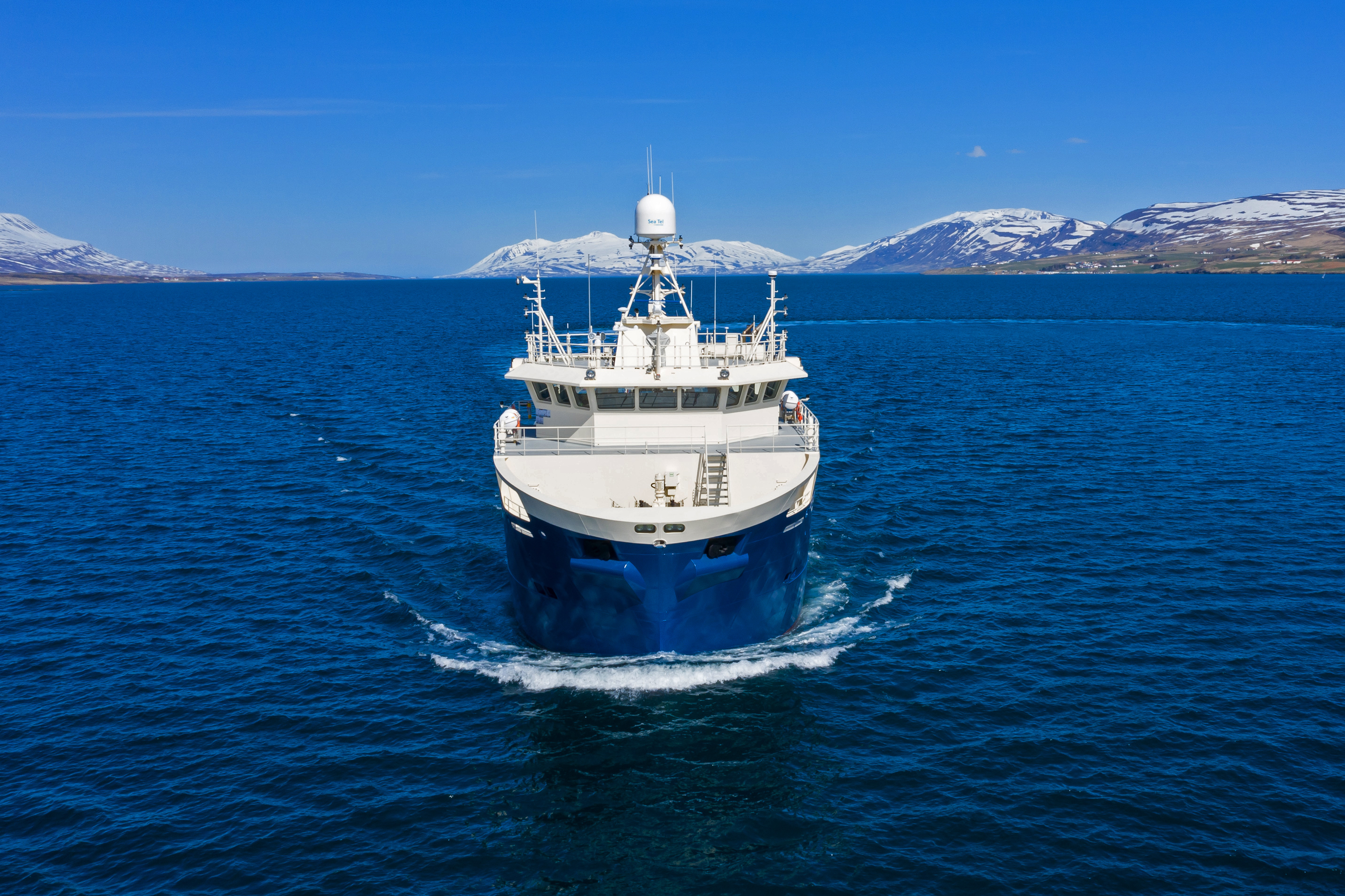
2025 was a good year for fishing, processing, land-based farming, and product sales. Samherji operated a fleet of seven fishing vessels: four fresh fish trawlers, two pelagic vessels and one freezer trawler. The company's fresh fish trawlers landed 26,691 tonnes of fresh raw material last year. Cod was the largest catch at approximately 16,000 tonnes. As in previous years, haddock, saithe, and redfish were the other main demersal species. The overwhelming majority of catches from the fresh fish trawlers were processed in Samherji's fish processing plants in the Eyjafjördur area in Dalvík and Akureyri. In total, the plants received 33,166 tonnes of raw material during the year.
"It has been our goal to maximise the value of catches through further processing in high-tech land-based processing facilities. Our customers are willing to pay higher prices if they consistently receive high-quality pieces cut to the same size. This is the core of our whitefish value creation," says Baldvin Thorsteinsson.
Samherji's pelagic vessels landed 51,287 tonnes of raw material during the year. Blue whiting accounted for the largest share at 22,262 tonnes.
A growing demand for most fish species
2025 was a good year for product sales, and market conditions were favourable. This is reflected in the increase in turnover at Ice Fresh Seafood, Samherji's sales and marketing arm. Demand grew for most fish species throughout the year.
Markets for cod products were particularly favourable, with demand continuing to grow into 2026. At the same time, market conditions for farmed salmon and Arctic char were more challenging, although overall sales were good.
Exciting times ahead in fish farming
Samherji has successfully farmed fish on land for almost a quarter of a century through its subsidiary, Samherji Fish Farming. Today, the company operates three smolt hatcheries, three land-based aquaculture facilities and two processing facilities.
Samherji Fish Farming harvested 5,809 tonnes liveweight last year. This included 3,140 tonnes of Arctic char and 2,669 tonnes of salmon, the company’s largest salmon production volume in a single year.
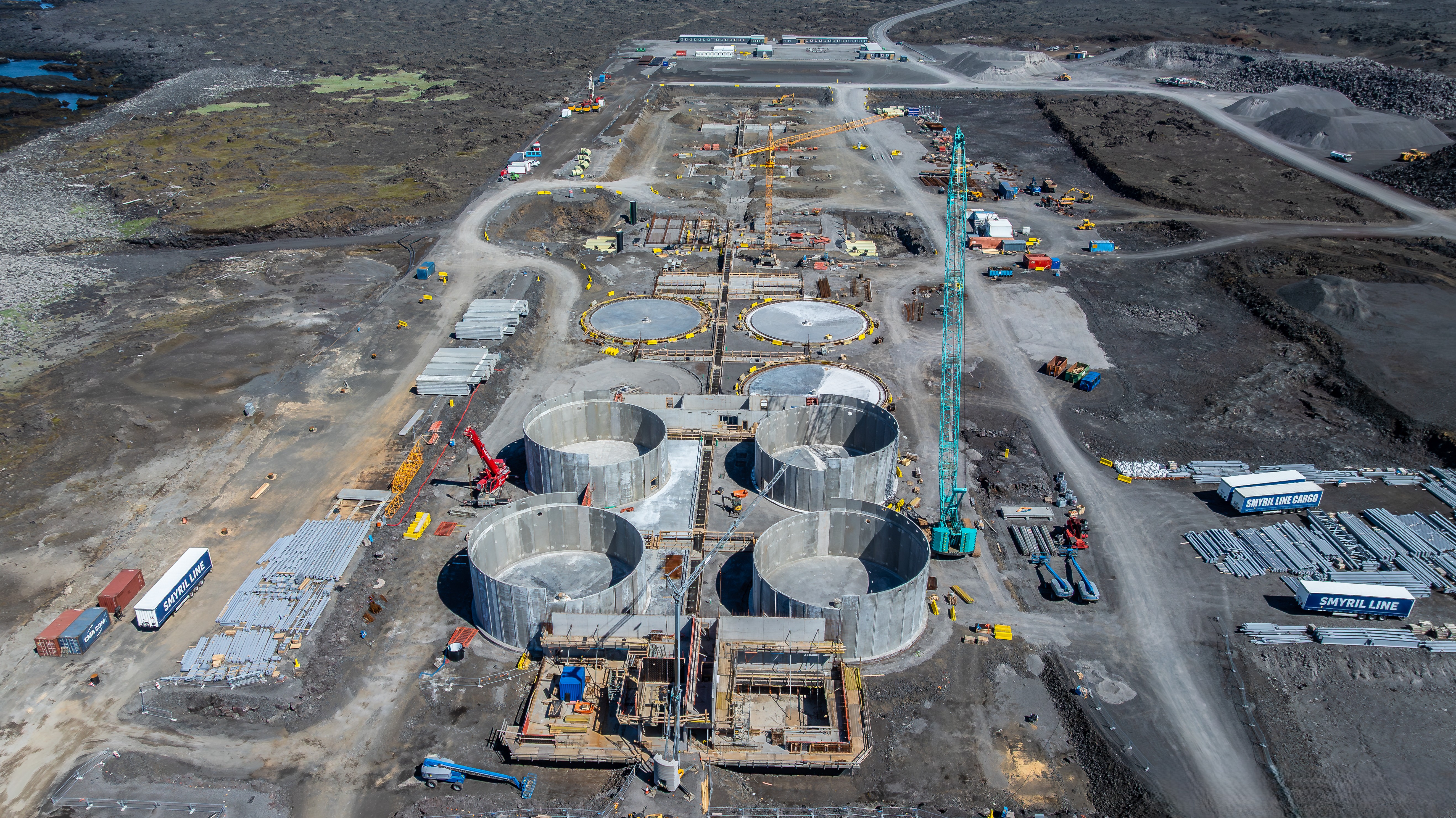
The increased salmon production capacity is mainly the result of the expansion of the Silfurstjarnan salmon facility in Öxarfjördur, Northeast Iceland. A new processing plant began operation in June 2025, completing the final stage of the facility’s operational upgrade. The project included major investments in large new tanks, a new smolt hatchery and the digitisation of the processing plant. Its successful completion also validated the technology and production process that will be implemented at the new Salmon Garden in Reykjanes.
High average employee tenure
At the end of 2025, 832 employees worked at Samherji hf. and its subsidiaries, with an average of 806 full-time equivalents during the year. The number of employees increased year-on-year, primarily due to expanded activities related to the construction of the Salmon Garden.
"Samherji's employees are the heart of our operations and the key to the company's success, whether in fishing and processing, land-based fish farming, sales or the office. That is why we place great emphasis on hiring capable and dedicated employees and provide them with an excellent working environment. The average employee tenure is now 10.6 years. We are proud of the loyalty reflected in these numbers,” says Baldvin Thorsteinsson.
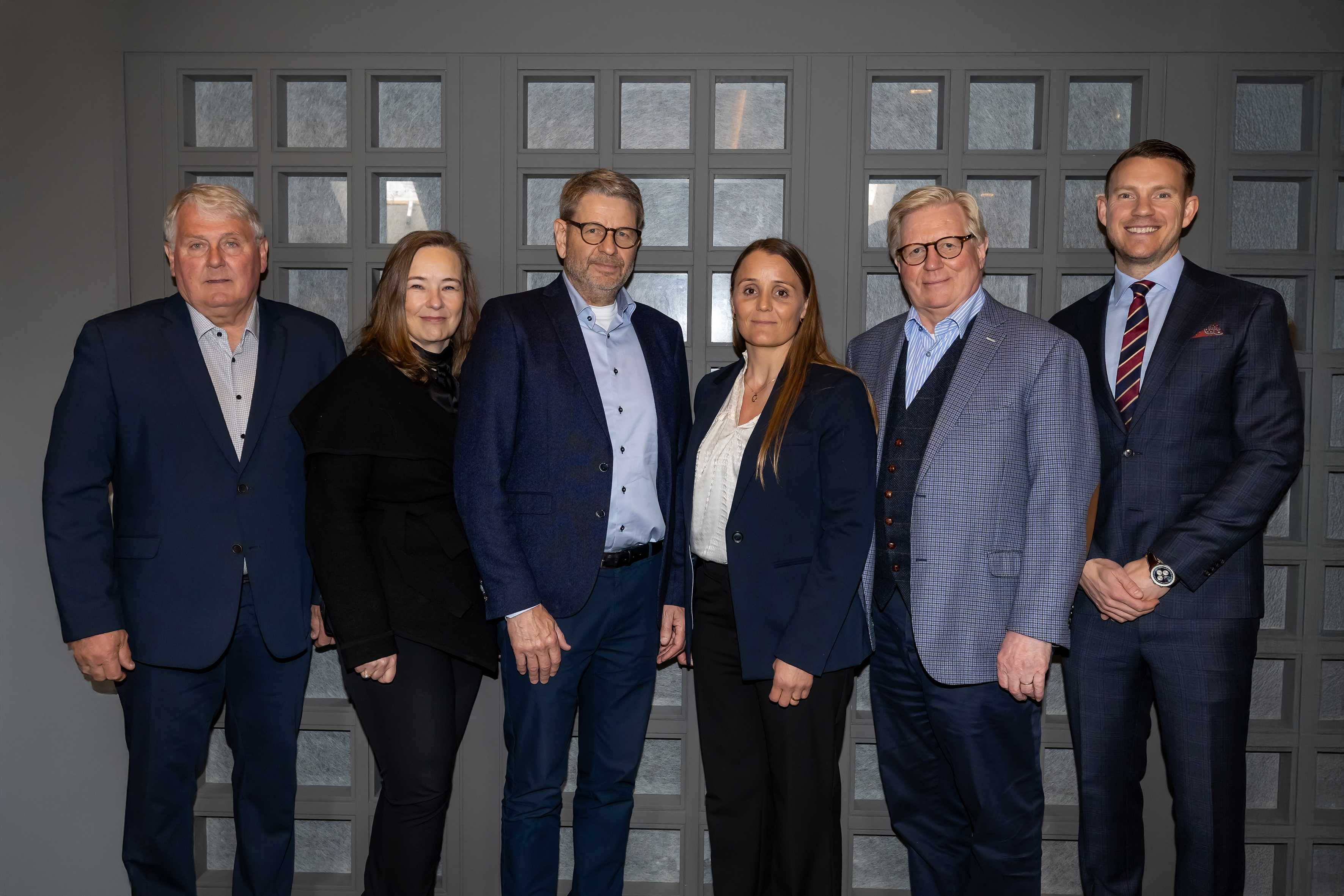
New board of directors of Samherji hf.
At the annual general meeting of Samherji hf. on 21 May 2026, the following were elected to the company's board of directors: Dagný Linda Kristjánsdóttir, Jón Sigurdsson (Chairman), Kristján Vilhelmsson, Óskar Magnússon and Eva Bryndís Helgadóttir.
Ásta Dís Óladóttir, Professor of Business Administration at the University of Iceland, has stepped down from the board after years of valued service and is succeeded by Eva Bryndís Helgadóttir, Supreme Court Attorney.
Annual and Sustainability Report published
Alongside this earnings press release, Samherji is publishing its 2025 Annual and Sustainability Report (in Icelandic). Now issued for the third consecutive year, the report outlines the company’s environmental and social impact and its corporate governance practices. The report also contains an overview of the company’s operations and financial position.
The Annual and Sustainability Report (in Icelandic) is available below.